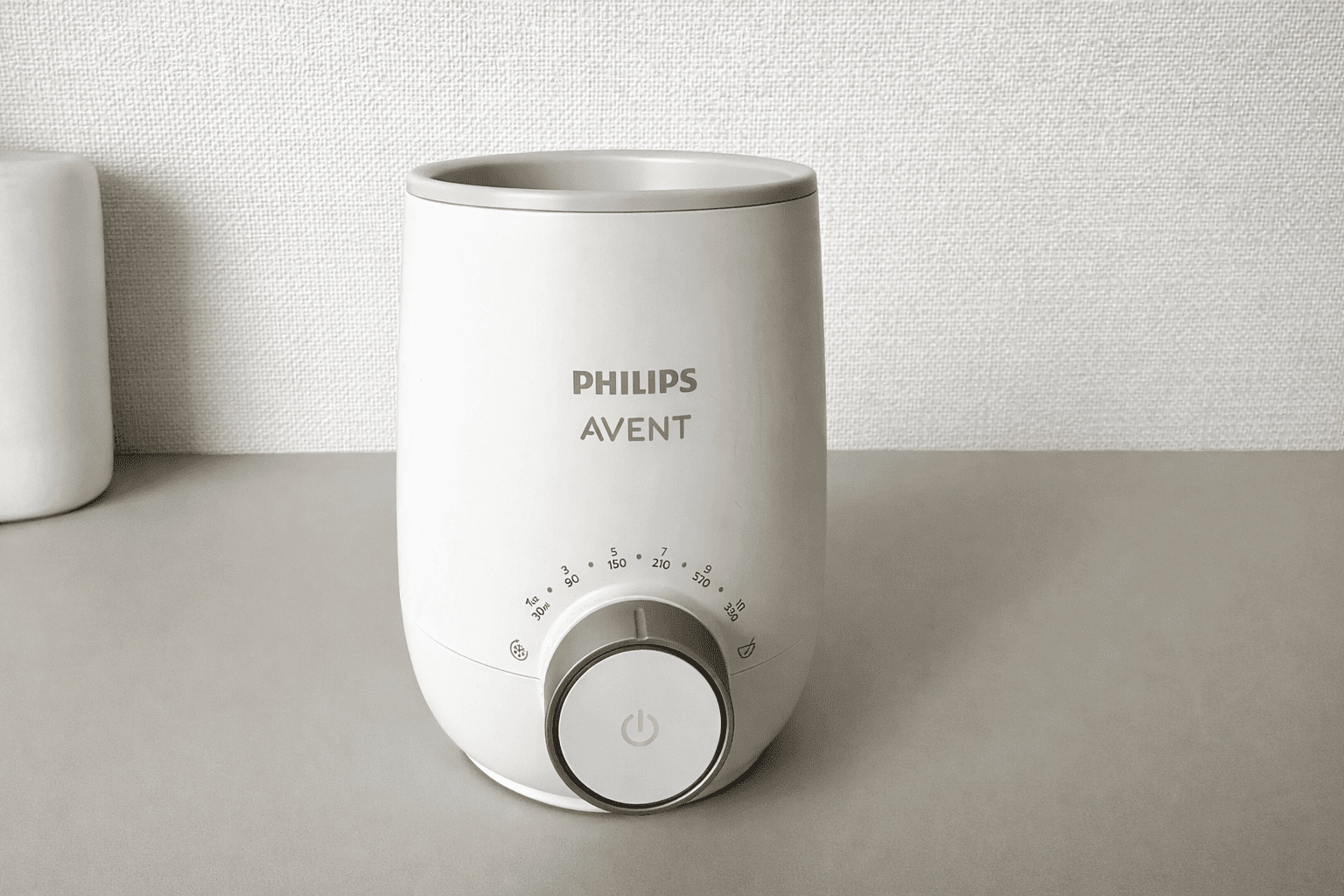
I’ll be honest: If you have other options, I don’t necessarily recommend buying the Philips Avent Bottle Warmer.
If you’re formula feeding, here’s a tip from someone who’s been in the trenches: if your budget allows, just go get the Baby Brezza Formula Pro Advanced. It is a total game-changer that saves so much time and energy, especially when you’re functioning on zero sleep. If that’s a bit out of reach, a simple constant temperature water kettle is a fantastic alternative. You can keep the water at a steady 40-50°C (I used Hipp, but check your specific formula’s instructions) and mix a bottle in seconds. The only downside? You have to be super precise with the powder-to-water ratio, which is a real test for your eyes at 3 AM!
Honestly, trying to count scoops while your brain is 90% fog is a recipe for disaster. I’ve definitely had those “Did I just put in three scoops or four?” moments more times than I’d like to admit.
However, if you are breastfeeding, the Philips Avent Bottle Warmer definitely deserves a spot on your baby registry. When I had my second, I had a huge oversupply, so I was constantly freezing and refrigerating milk. My little one has a sensitive tummy and absolutely refuses cold milk—it’s an instant diaper disaster if she drinks it chilled! So, I needed something to warm up those bottles safely. The gentle water bath heating of the Avent warmer is great because it doesn’t destroy the precious nutrients in breast milk. In that sense, it’s a helper… but let’s just say it’s not always a perfect helper. 😂
How to Use the Philips Avent Bottle Warmer
1) Philips Avent Bottle Warmer Settings Chart
Before you dive in, you’ve got to know which setting is which. Using the wrong one is the quickest way to end up with milk that’s too hot or still ice-cold. Here’s a quick cheat sheet for you:
| Setting | Milk Amount | Typical Warming Time |
| Low Setting | 60–90 ml (2–3 oz) | ~3 minutes |
| Medium Setting | 120–180 ml (4–6 oz) | ~4–5 minutes |
| High Setting | 210 ml+ (7 oz+) | ~6+ minutes |
| Keep Warm / Defrost | Frozen Milk / Small Snacks | Varies (Up to 45 mins for defrosting) |
Key Takeaways:
- Plastic & Glass Bottles: Just match the setting to the amount of milk, up to about 330 ml (11 oz).
- Silicone Bottles: These are tricky! Silicone doesn’t conduct heat as well, so you’ll usually need an extra 3–4 minutes.
- Milk Bags: Stick to the Keep Warm or Defrost settings. You don’t want to overheat those delicate bags!
2) Step-by-Step Guide: How to Use the Avent Bottle Warmer
It’s super simple once you get the hang of it, but there are a few “mom-tricks” to remember:
- Bottle In, Water In: Place your bottle in the warmer. Add drinking water until the level matches the milk in the bottle. For those big 7 oz bottles, keep the water about 1 cm below the rim of the warmer so it doesn’t overflow.
- Pick Your Amount: Twist the dial to the right setting (60ml, 120ml, etc.) and press start.
- Watch the Progress Light: It blinks at you like it knows you’re losing your mind. Just one more minute, lady, it says. I swear I’ve talked to this machine more than my husband some nights.By the way, if you forget to add the water, the whole thing starts to smell like burning plastic almost immediately—don’t ask me how I know that, just learn from my 3 AM mistakes.
- Ready to Go: Once the light stays on (stops blinking), the milk is ready. It will automatically switch to Keep Warm mode, which is a life-saver if you get distracted by a sudden diaper blowout.
- The Wrist Test: Always drop a few drops on the inside of your wrist. It should feel comfortably warm. If it feels a bit uneven, give the bottle a gentle swirl.
Extra Tip: For tiny 2 oz bottles, keep a close eye on it! Because the volume is so small, it can overheat way faster than the chart suggests.
3) The Defrost Setting: Handling Liquid Gold Properly
Defrosting breast milk can be stressful, but this setting takes the guesswork out of it.
- How to do it: Put your frozen bottle in, add water to match the milk level, and select the Keep Warm / Defrost setting.
- The Reality Check: Since frozen milk is dense, it’s not always perfect on the first cycle. For a 2 oz bottle, it can take around 45 minutes to fully defrost. Yes, you read that right—45 minutes! I usually end up staring at it like it’s a slow-motion movie. So, plan ahead, mama.
Why is the Philips Avent Bottle Warmer So Slow? (H2)
How can I put this? It is sloooow. When I’m holding a hungry, screaming baby, I have genuinely considered tossing this machine out the window. 😂
There are actually three reasons why it takes its sweet time: Gentle Heating, Volume, and Starting Temp. First, it uses a water bath. Unlike a microwave (which is a big no-no), this warms the milk evenly and gently to protect the nutrients. Second, volume matters. More milk equals more time. If you’re warming a cold 8 oz bottle, be prepared to wait. Finally, bottle material plays a huge role. Glass is a slower heat conductor than plastic.
My real-world timing (based on my own impatient testing): *
- 🍼 PP Bottles: ~5 mins
- 🍼 PPSU Bottles: ~4 mins
- 🍼 Glass Bottles: Add at least 1 extra minute to the clock!
Maintenance – Don’t Ignore the “Brown Spots”
Daily Maintenance: Battle the Limescale
If you see brown or white crusty spots at the bottom, that’s limescale.
- The Vinegar Hack: Mix a 1:1 ratio of water and white vinegar, let it soak (or run a cycle), and it’ll look brand new.
- Why Distilled Water is Key: Save yourself the scrubbing! Using distilled water instead of tap water prevents that nasty buildup from happening in the first place. Plus, you won’t feel like you’re performing a science experiment every two weeks.
Safety Warning: Why it’s NOT an “All-Night” Appliance
Never leave the warmer on all night. It’s a water-based system, and if the water evaporates, you’re looking at a dry-burn hazard. I know it’s tempting to keep it ready to go, but it’s just not worth the risk.
Travel & Cleaning – Choosing the Right Tool (H2)
The Travel Dilemma (Travel Bottle Warmer)
Is this machine travel-friendly? Not really. It’s bulky, needs a plug, and the water sloshes everywhere if you try to move it. If you’re going on a road trip, I highly recommend the Avent Non-Electric Travel Thermos. You just put hot water in the flask, and it stays warm for hours—perfect for the car!
Warmer vs. Sterilizer
Don’t get confused! This is a bottle warmer, not a Baby Bottle Sterilizer. While it’s great for heating, it won’t kill bacteria. If you have limited counter space, look into Avent’s 2-in-1 options, but remember they serve two very different purposes.
FAQ – Quick Answers for Tired Parents
- Can I use Dr. Brown’s bottles? Yes! Just make sure the water level in the warmer matches the milk level in the bottle.
- How often should I descale? Once a month is standard, but if you have hard water, do it every two weeks or whenever it starts looking “crusty.”
- Why won’t the light turn on? Check the fuse or the “overheat protection” reset. If it ran dry (guilty as charged!), it might have shut itself off for safety.
- Where can I find the Philips Avent Bottle Warmer Manual PDF? You can download the official manual directly from the Philips support website.
Learn more

As a mom of two, I learned when to stop burping a baby through trial and error. I’m sharing this clear, milestone-based guide so you can navigate this step with confidence.
Related Articles
You’re not alone on this parenting journey — every mom and dad learns step by step.Explore our baby essentials, parenting tips to help you raise baby with confidence and calm.
-
-

Baby Buddha 2.0 Reviews: A Working Mom’s Honest Take on Whether It’s Worth?
Here’s the thing—you’re juggling a million decisions as a new mom, and choosing a breast pump feels impossibly high-stakes. Will it actually empty you? Can you pump at work without…
-
Is Albeebaby Legit? My real Albee Baby Review
I’m a mom of two. When my oldest daughter was born, it was right in COVID-19 pandemic. so almost everything was bought through a babyonline store. I remember buying a…
-
Thanks God!! My daughter can finally sleep regularly.
My oldest daughter went through a challenging phase between 2.5 and 3 years old where she absolutely refused to sleep—sometimes staying awake until 3 AM! It took me quite a…
-