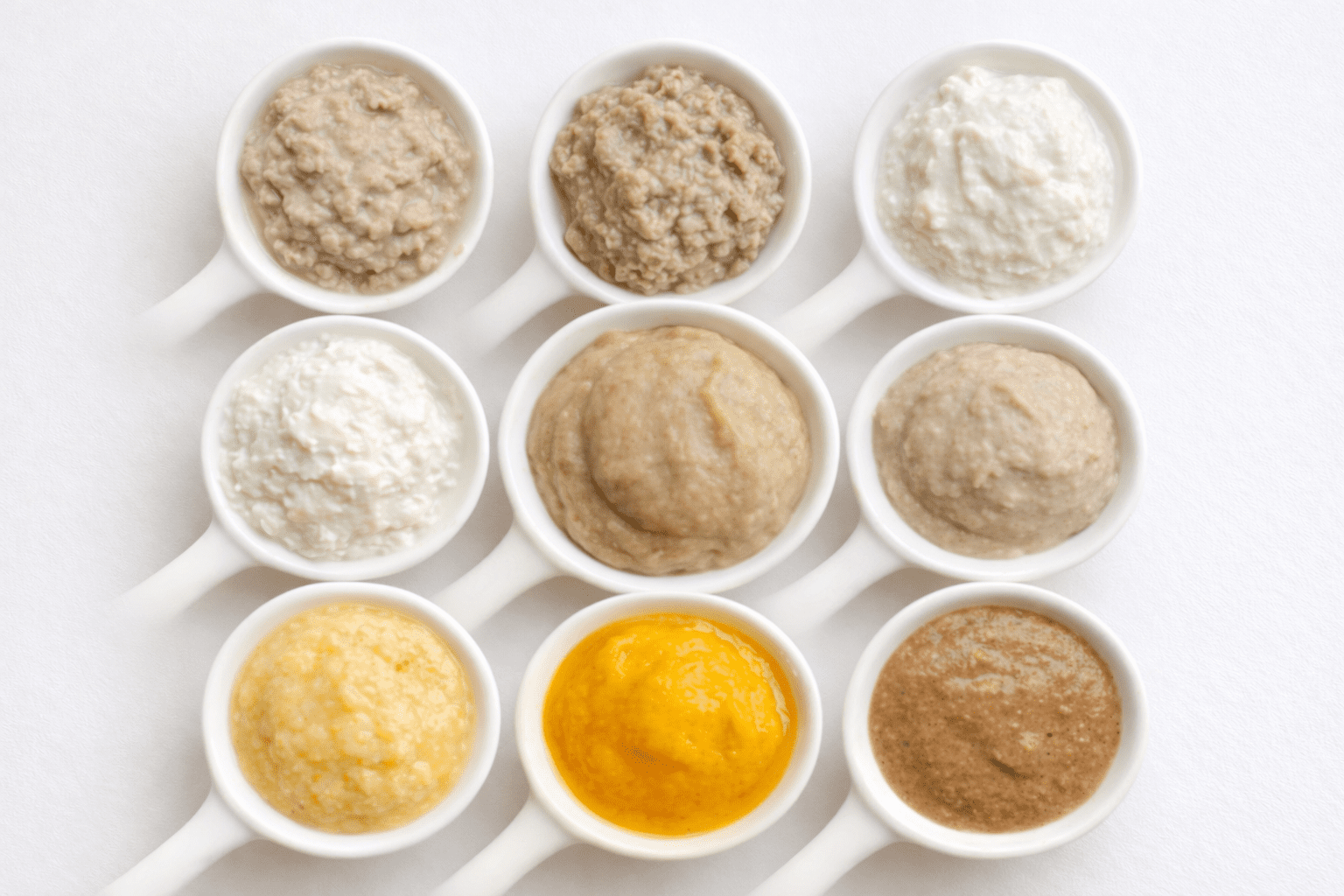
How to puree meat for baby?Meat purée sounds simple until you actually make it—then you’re dealing with stringy beef, dry chicken “dust,” and the one question that makes every parent freeze: How long is this safe in the fridge?
I’m a second-time mom, and I’ll be honest: my first kid made meat purée feel like a personal challenge. I’d cook it, blend it, get it perfectly smooth… she’d take one tiny taste and look at me like I had completely lost the plot. And then—without fail—those carefully made batches would end up as a “bonus meal” for our cat. 😂 (Best-fed cat on the block, truly.)
So this guide is the one I wish I had back then: warm, practical, not fussy, and focused on what actually works. I’ll walk you through when to start, what texture to aim for by age, how I make beef/chicken/fish purée (plus ground beef), how I store it safely, what I do when my baby refuses, and how I use the same pot for adults too.
Quick note: I’m not giving medical advice. If your baby was born early, has swallowing issues, or you’ve been given a feeding plan, it’s best to check with your pediatrician before changing textures or introducing new proteins.
1) When to Start Giving Baby Pureed Meat (Simple Version)
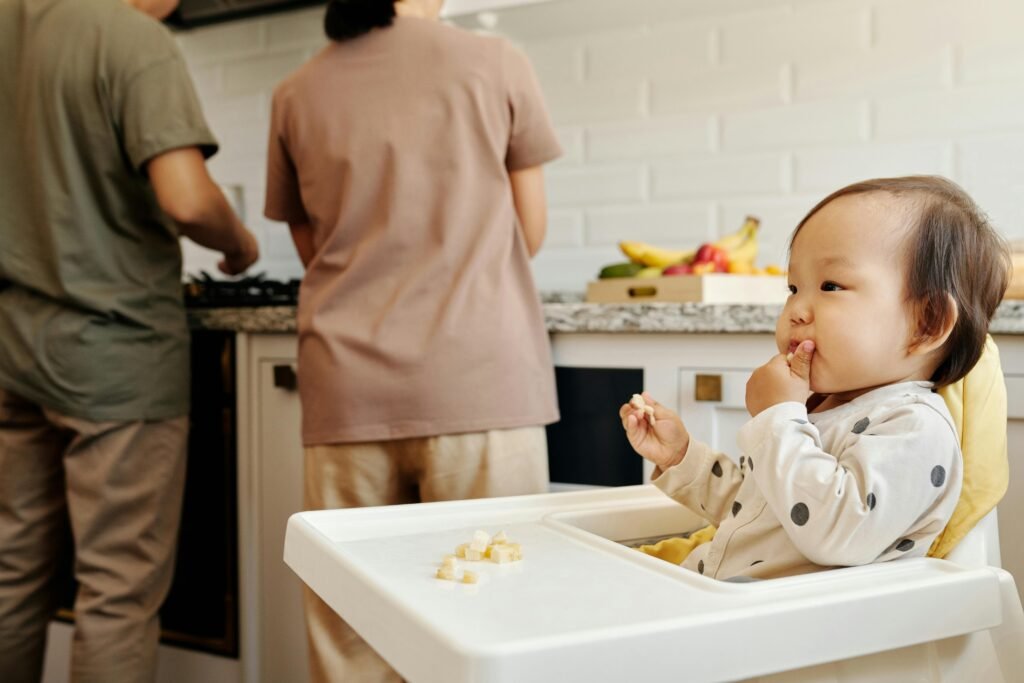
I don’t start meat just because my baby hit a certain age on the calendar. I wait until my baby seems ready for solids and is handling smooth textures comfortably.
For many families, that’s around the early solids stage (often around 6 months when readiness shows up). And I start small—just a couple of spoonfuls, super smooth, no pressure.
If you’re starting at 7 months (yes, people search how to puree meat for a 7 month old baby), you’re not behind. I’d just start smooth and move slowly.
2) The Right Meat Texture by Age (My “Texture Ladder”)
This is the part I wish someone had explained earlier: meat isn’t “purée forever” or “chunks overnight.” It’s a slow climb.
6–9 months: Smooth purée (really smooth)
My goal is easy swallowing. Meat is fibrous, so I blend longer than I think I need and add liquid until it’s actually smooth—not “kinda smooth.”
9–18 months: Thicker mash → tiny soft bits
Once my baby’s comfortable, I start letting meat have a little texture. Still soft. Still moist.
18–24 months: Soft family texture (still kid-friendly)
At this point, I’m aiming for “what we eat, just safer.” I still avoid dry, hard, crumbly bits because they’re tough to manage.
And if you’re doing BLW or transitioning toward it, I think in terms of shape too: soft, moist, manageable beats tiny dry crumbles every time.
3) Common Meat Purées (How I Make Them, What Goes Wrong, How I Fix It)
If you’ve been googling:
- how to prepare meat puree for baby
- how to blend meat for baby puree
- how to make smooth meat puree for baby
- best beef to puree for baby
- how to puree ground beef
…this is the section you actually want.
What is the best way to puree meat, How to make smooth meat puree for baby (works for beef, chicken, fish, most meats)
This is my reliable, no-drama routine:
- Pick meat that will blend well (tender is easier).
- Trim obvious issues (extra fat; chicken skin; for fish, check for bones).
- Cook until fully done and soft.
- Save some cooking liquid.
- Blend in stages, adding liquid gradually until it’s the texture I want.
That’s my answer to “What’s the best way to puree meat?”
Cook it soft, then blend it with liquid until smooth.
A) How to make Beef Purée for baby, How to cook beef for baby led weaning (Stage 1 / around 6 months)
Beef is the most common “why is this stringy?” purée. Totally normal.
How I choose beef (best beef to puree for baby):
I go for a tender cut. Sirloin is one common option because it tends to blend more smoothly than tougher cuts.
How I make beef purée (beef puree recipe / baby food meat stage 1):
- Trim obvious fat (not because fat is “bad,” but because it can make texture unpredictable).
- Cook until the beef is fully done and fork-soft.
- Save some cooking liquid.
- Blend, adding liquid a little at a time, until it’s smooth.
What goes wrong + how I fix it
- Stringy texture
- I cook it softer, blend longer, and add more liquid.
- Dry, crumbly purée
- Same fix: more liquid, more blending. Meat needs more help than fruit or veg.
- Baby hates it
- I don’t make it a battle. And I remind myself of something that saved my sanity with my first: at this stage, the main job is learning how to eat—not hitting perfect nutrition—because milk is still doing most of the heavy lifting.
- So I keep it tiny, keep it smooth, and keep it low-pressure.
Beef baby recipe 12 months:
By around 12 months, I usually don’t need “perfectly smooth.” I go thicker or slightly textured—still soft, still moist—because it helps build chewing skills.
B) How to make Chicken Purée for baby (easy to cook, easy to dry out)
Chicken can turn into dry fluff if you don’t add enough liquid.
How I make chicken purée
- Cook until fully done and soft.
- Cut small.
- Blend and add liquid gradually until smooth.
Some parents use a bit of breast milk or formula as the blending liquid. I see that as optional—texture is the goal.
Common issues
- Powdery/gritty texture: I add more liquid and blend longer.
- Too dry: I stop trying to “force it” without liquid.
C) How to make Fish Purée for baby (quick-cooking, often blends beautifully)
Fish can be a nice option because it cooks fast and can blend smooth—if you’re careful.
How I make fish purée
- Cook fish until fully done and soft.
- Check carefully for bones and remove them completely.
- Blend with a little cooking liquid until smooth.
If I’m not confident about bones: I don’t guess. I pick a different protein that day. Safety wins.
D) How to make Ground Beef for baby (skillet first, then purée)
If you’re searching how to puree ground beef, this is the method I actually like because it’s more controllable.
How I do it
- Heat a skillet and cook the ground beef until it’s fully browned and cooked through, breaking it up as it cooks.
- If there’s a lot of fat, I drain off the excess.
- I add a small splash of liquid so it doesn’t turn into dry crumbles.
- Then I blend with more liquid as needed until smooth.
Two routes from here
- Purée route (younger babies): blend until smooth.
- Transition/BLW-ish route (older babies): I aim for soft, moist, cohesive shapes (not dry little bits), and I stay close during meals.
So… which meat is “best”?What is the best way to puree meat?
I keep it simple: the best meat is the one you can cook safely, blend to a texture your baby can handle, and store safely—without turning your kitchen into a stress zone.
If you’re overwhelmed, pick one (beef, chicken, or fish), get your method down once, then rotate later.
4) How to Store Meat Purée Safely, How long to keep meat puree for babies in fridge(and Reheat Without Stress)
This is where the anxiety usually spikes: how long to keep meat puree for babies in fridge.
Here’s what I do: I stay conservative, because it’s easier to remember and harder to regret.
My fridge rule
For meat purée, I keep fridge time short—often around one day. If I’m not using it soon, I freeze it.
My storage routine (simple and repeatable)
- I portion out what I’ll serve before feeding.
- I freeze the rest in single servings.
- I label the date.
- I avoid thawing and re-freezing the same portion.
Reheating (what I avoid + what I do instead)
I avoid microwaving meat purée because uneven heating and hot spots can happen.
Instead, I warm it gently, stir well, let it sit for a moment, then test the temperature before serving.
If my baby already ate from the bowl
I don’t save it. That’s why I portion first.
5) Baby Won’t Eat Meat Purée? + Vegetables + Fruit You Can Serve Without Cooking
If your baby makes that face like you personally offended them… welcome. It happens.
First: I don’t panic (and I definitely don’t force it)
Here’s the mindset shift that helped me the most as a second-time mom: if my baby doesn’t eat meat purée, it’s not a crisis.
In this stage, the big win is learning how to eat—new textures, swallowing, sitting for a meal—not perfect nutrition, because milk is still the main source of nutrition right now.
So I don’t chase my baby with a spoon. I don’t turn dinner into a power struggle. I keep it calm.
What I do instead (gentle and repeatable)
- I offer a tiny amount next time.
- I make it smoother (or a little thinner).
- I try again later, casually—no big “test.”
A super gentle bridge: veggie purée + meat broth
If meat purée gets rejected hard, I take a softer step:
I’ll add a little meat broth into a veggie purée so my baby can get used to the “meat flavor” gradually without dealing with the full meat texture right away.
A few tips I personally follow to keep this simple and safe:
- I use broth from meat I cooked at home (basically the cooking liquid).
- I keep it plain (no added salt or heavy seasoning).
- I start with just a spoonful mixed into a familiar veggie purée.
It’s not a trick—it’s more like easing into the taste, one tiny step at a time.
Vegetables
Same rule as everything else: texture follows ability. Smooth first if needed, then gradually thicker. If my baby struggles, I step back one texture level and try again later.
Fruit that doesn’t require cooking
Banana is my go-to example: I just mash it. On chaotic days, simple wins matter.
6) How to Puree Meat for Adults (Same Pot, Two Versions)
This is my time-saver.
- I cook meat until it’s fully done and soft.
- I pull out a baby portion and blend it smooth with cooking liquid.
- The rest is for adults—normal texture, or softer chopped/minced if that’s what we want.
If an adult needs a medically prescribed texture level, I don’t improvise—I follow professional guidance.
Q&A (FAQ)
Can you puree meat for babies?
Yes. Cook it fully, blend it to an age-appropriate texture, store it conservatively, and supervise meals.
When to start giving baby pureed meat?
When baby is ready for solids and handling smooth textures comfortably (often around 6 months when readiness shows up).
How to puree meat for a 7 month old baby?
Start very smooth, add liquid as needed, and move toward thicker textures slowly.
How to make smooth meat puree for baby?
Cook until fork-soft, blend longer than you think, and add cooking liquid gradually.
Best beef to puree for baby?
Tender cuts blend more smoothly—sirloin is one common example.
How to puree ground beef?
Skillet-cook it until fully browned, add a splash of liquid, then blend until smooth.
How long to keep meat puree for babies in fridge?
I keep it short—often around one day—and freeze what I won’t use soon.
Can I microwave meat purée?
I avoid it due to uneven heating risk. I warm gently, stir well, rest, and test temp.
Baby won’t eat meat purée—what now?
I don’t force it, and I don’t panic. At this stage, the main goal is learning how to eat—milk is still doing most of the nutrition work. I’ll try a smaller amount, make the purée smoother, or take a gentler step by mixing a little plain meat broth into a veggie purée so my baby can get used to the flavor first. Then I’ll try meat again later, no pressure.
Closing
You don’t have to do this perfectly. If you keep it to a few steady habits—cook it soft and fully done, blend to your baby’s stage, store meat purée conservatively, don’t save food that’s been eaten from, reheat gently, and stay close during meals—you’re doing it safely and thoughtfully.
And if your first baby hands your beautiful meat purée straight to the family cat? You’re still doing great. 😄
Learn more

As a mom of two, I learned when to stop burping a baby through trial and error. I’m sharing this clear, milestone-based guide so you can navigate this step with confidence.
Related Articles
You’re not alone on this parenting journey — every mom and dad learns step by step.Explore our baby essentials, parenting tips to help you raise baby with confidence and calm.
-
-

Baby Buddha 2.0 Reviews: A Working Mom’s Honest Take on Whether It’s Worth?
Here’s the thing—you’re juggling a million decisions as a new mom, and choosing a breast pump feels impossibly high-stakes. Will it actually empty you? Can you pump at work without…
-
Is Albeebaby Legit? My real Albee Baby Review
I’m a mom of two. When my oldest daughter was born, it was right in COVID-19 pandemic. so almost everything was bought through a babyonline store. I remember buying a…
-
Thanks God!! My daughter can finally sleep regularly.
My oldest daughter went through a challenging phase between 2.5 and 3 years old where she absolutely refused to sleep—sometimes staying awake until 3 AM! It took me quite a…
-