You know that moment when your baby stops staring at your face like you’re the entire universe.
Their eyes start tracking lights, trees, dogs, the grocery store ceiling—basically everything that isn’t you.
And sometimes on a trip or even a quick Target run, the only way they’ll settle is if you turn them outward so they can “see the world.”
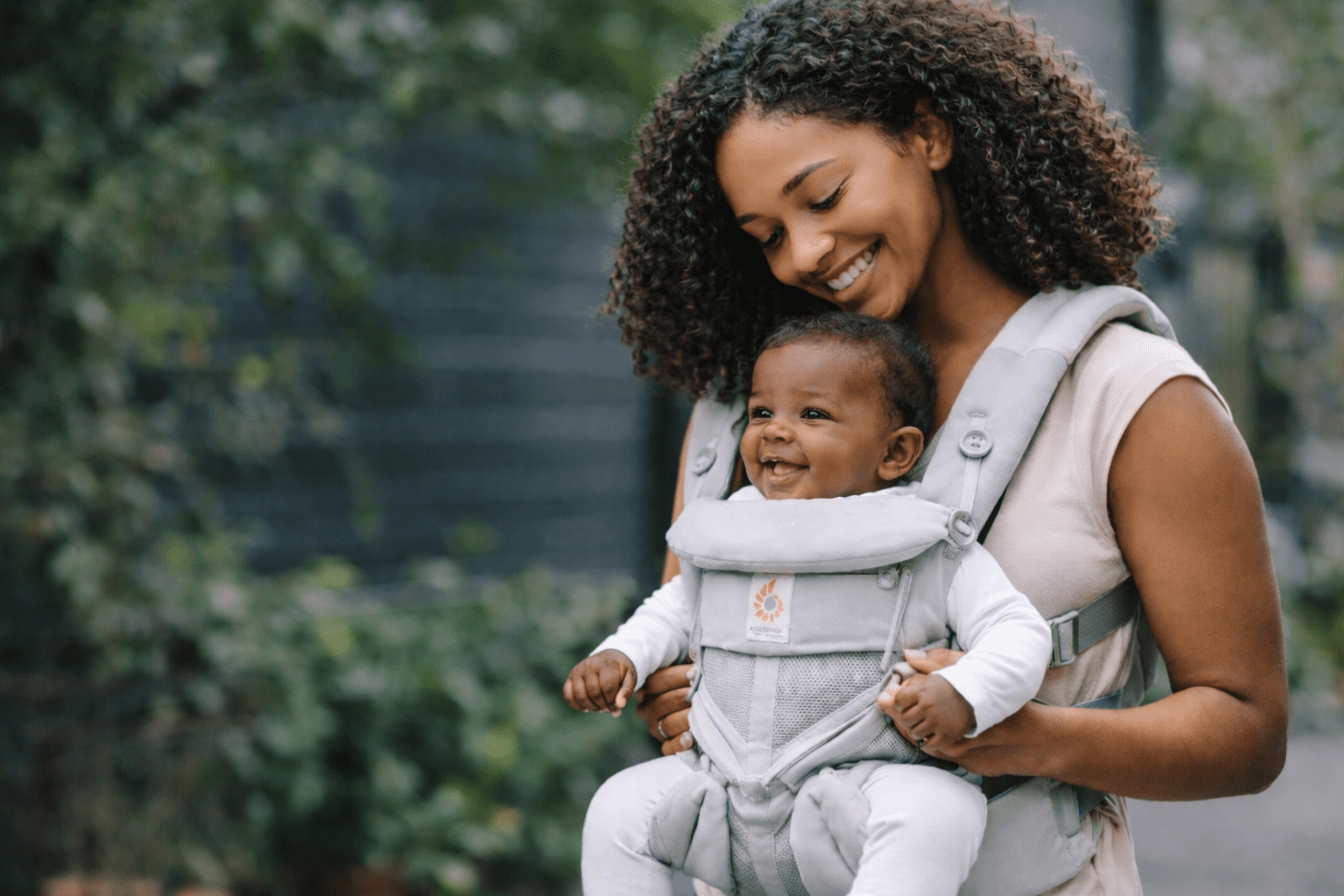
That’s exactly when the idea of a baby carrier front facing pops into your head—just like it did the first time it happened to me.
But the real questions come fast: when can baby be front facing in carrier, and when is it smarter to use a baby chest carrier or baby back carrier instead?
How do I choose the right one, how to put baby in front-facing carrier safely, how long can we do it per session, what’s the best front facing baby carrier that actually supports my baby’s body and doesn’t wreck my back, and when is it simply not recommended—even if my baby seems to love it?
My approach is simple.
A forward facing baby carrier is not my default.
It’s a short tool I use only when my baby is truly ready, and only when I can switch back fast.
When Can Baby Be Front Facing in Carrier? (Front Facing Baby Carrier Age vs Readiness)
I get why “front facing baby carrier age” is such a big search.
A clean age answer feels comforting.
In real life, readiness matters more than the calendar, especially because different models have different rules.
I didn’t get to that conclusion alone.
I pieced it together from two places: what I’ve seen work for the moms around me, and what I learned after checking a few reputable medical and child-safety resources.
Those sources kept pointing to the same idea: head control, airway safety, and proper support matter more than chasing a specific month.
If you’re asking when can babies be front facing in carrier, I start with two checks.
I check my baby’s body first.
I check the carrier manual second.
“Months” aren’t the only standard, so I look for 4 readiness signs
1) Head and neck control is steady.
I want stable control across a normal outing, not a few strong seconds.
2) My baby can stay awake in the carrier for a short window.
Forward-facing plus dozing off is where risk rises fast, so I treat sleepiness as a stop sign.
3) My baby meets the carrier’s size requirements for outward-facing.
This includes height, weight, and any brand-specific rules, because one “infant carrier” can be very different from another.
4) My baby can clearly show discomfort.
Turning away, arching, pushing, stiffening, or getting “done” quickly is useful feedback.
If any of these are missing, I don’t do forward-facing.
If all four are present, I still treat it as “brief and optional.”
Front facing baby carrier 2 months / Front facing baby carrier 3 months: what I do
I’m direct here.
Front facing baby carrier 2 months is not recommended.
Front facing baby carrier 3 months is also not recommended in my book, because head control and sleepiness are still a moving target.
This is another place where “my mom-friends’ reality” and “authoritative guidance” line up surprisingly well.
The moms I trust usually say the same thing: early months are easier inward-facing because baby is supported and you can monitor them.
And the medical and safety guidance I’ve read puts a lot of weight on keeping the airway clear, keeping baby in a supported position, and being able to observe your baby easily.
I still handle the “wants to look out” phase, just without outward-facing.
These alternatives work without turning the outing into a gamble.
Option A: Inward-facing in a baby chest carrier, but worn higher.
A higher carry changes the view a lot, and I can keep eyes on my baby’s face.
Option B: Inward-facing, but with a better environment.
A window, an outdoor walk, or a calmer aisle satisfies curiosity with less stimulation.
Option C: Hip carry with a baby hip carrier, only if I’m confident and baby is ready.
A baby hip carrier or infant hip carrier can give a great view, and I can still read facial cues.
If you’re thinking, “So when can a baby be front facing in a carrier if not at 2–3 months?”
My answer is always the same: later, when readiness is obvious and the manual agrees.
“Roughly how many months?” (a safer way to say it)
I phrase it like this because it stays honest.
Forward-facing is usually a later-stage option, and readiness plus your carrier’s instructions matter more than age.
If head control isn’t solid, I don’t do it.
Is Forward-Facing Baby Carrier Good or Bad?
People ask this exact question: Is forward-facing baby carrier good or bad?
I don’t think it’s automatically bad.
I think it’s higher-management, so I don’t make it my everyday plan.
This is also where I leaned hardest on “real moms” plus “reputable medical and safety info.”
The shared thread is simple: when you face baby outward, it can become harder to monitor and easier to overdo, so you have to be more disciplined about time, fit, and switching.
Why it’s controversial: 4 risks I watch for
1) Airway and visibility.
If I can’t see my baby’s face, I can’t read breathing and comfort cues, so I switch positions immediately.
2) Hip and spine positioning.
Some forward-facing setups reduce thigh support, and that can mean more dangling and less comfort.
3) Overstimulation.
Facing out gives my baby fewer ways to “hide,” so busy places can flip the mood quickly.
4) Parent comfort.
Outward-facing often pulls weight farther from my center, and my back complains sooner.
If you’re thinking, “But my baby is calm facing out, doesn’t that prove it’s fine?”
It proves my baby enjoyed it in that moment.
It doesn’t prove it’s the best default position.
Safety red lines (what I clearly do not do)
Not recommended:
- Forward-facing before steady head control is obvious.
- Forward-facing if my baby falls asleep easily in carriers.
- Forward-facing when my baby is already fussy or overstimulated.
- Forward-facing as a long outing default.
- Forward-facing sleep.
If my baby starts to doze while facing out, I switch right away.
If a carrier makes switching hard, I don’t use it for forward-facing.
How Long Can Baby Stay Forward-Facing? (Short Sessions Only)
This is the question behind almost every outing: how long can baby be forward-facing each time?
I don’t use a fixed number.
I use a strict “short session” rule plus early cues.
This is also one of those “group chat wisdom + safety guidance” moments.
The moms around me say: the minute you push it too long, the baby goes from calm to overloaded.
The credible guidance I read backs that up by emphasizing monitoring, airway safety, and avoiding positions that become riskier when baby is tired.
My rule: forward-facing is a short tool
I don’t start an outing in outward-facing.
I start inward-facing because it’s easier to monitor and regulate.
If things are going well and my baby is clearly ready, I may switch briefly.
If you’re asking when can baby go front facing in carrier for longer stretches, my answer is that I don’t treat longer stretches as the goal.
The goal is comfort and safety, and short sessions usually get us there.
The 8 “switch now” signals I trust
I switch back as soon as I see these.
- Yawning.
- Turning the head away repeatedly.
- Arching the back.
- Kicking or squirming that doesn’t settle.
- Sudden quiet while I can’t see the face.
- A flushed face that looks stressed, not excited.
- Deep thigh marks or clear discomfort around the legs.
- My back starts hurting quickly.
If you’re wondering, “Do I really need to switch if they’re not crying?”
Yes, because crying is late feedback.
I like early prevention.
Best Front Facing Baby Carrier — What to Look For (Not Just Brand Names)
People search best front facing baby carrier and best baby carriers for a reason.
A good carrier makes everything easier.
A bad fit turns babywearing into a chore.
I shop with a framework, not hype.
That’s what I learned from watching other moms buy three carriers chasing one “perfect” solution, and from reading practical safety guidance that keeps circling back to fit, support, and visibility.
Standard 1: adjustable seat width + real thigh support
I want a seat that adjusts as my baby grows.
I want support across the thighs, not a narrow base.
If legs look like they’re hanging straight down, I treat that as a setup or design problem.
Standard 2: easy switching between positions
Real life is constant switching.
Curious becomes tired quickly.
So the best carriers let me move between inward-facing and outward-facing without a full reset.
This is also why I keep a baby carrier wrap or baby wrap carrier around for home days.
A good baby wrap sling can be a calm inward-facing option when I don’t need outward-facing at all.
Standard 3: parent comfort is part of the safety system
If my back hurts, I won’t babywear.
So I care about a supportive waistband and weight distribution.
If forward-facing makes my back hurt fast, I don’t force it.
Brand keywords I mention naturally (because people search them)
I see searches like baby bjorn carrier front facing, ergo baby carrier front facing, front facing baby carrier Ergobaby, and tula baby carrier front facing all the time.
Those brands can be great, but the model matters more than the logo.
I treat the manual as the final authority.
How to Put Baby in a Front-Facing Carrier (Safer Setup Checklist)
This is where I prevent most problems.
If the front facing baby carrier position is off, everything else gets harder.
I use a short checklist every time.
The reason I’m strict is because this is where “experienced moms” and “authoritative guidance” overlap again: fit and visibility prevent most issues before they start.
My 60-second check before I step out
- Tight: my baby should not slump.
- In view: I can see my baby’s face at all times.
- Close enough to kiss: my baby is high enough that I can kiss the top of the head without leaning.
- Keep chin off chest: no curled posture.
- Supported back: my baby feels snug and stable.
If you’re asking How to put baby in front-facing carrier safely? this is where I start.
If I can’t keep the face visible, I don’t do forward-facing.
How I judge a hip-friendly seat in plain English
I ask three questions:
- Are the thighs supported from knee to knee?
- Are the knees at or above the level of the hips?
- Is the seat width adjustable so legs are not dangling straight down?
If the answer is no, I switch positions.
If you’re thinking, “But the carrier says it supports outward-facing,” compatibility isn’t the same as a good fit today.
The top 6 mistakes I avoid
- Wearing too low and too loose.
- Keeping baby forward-facing when baby gets sleepy.
- Focusing on “facing out” and ignoring thigh support.
- Not practicing at home before going out.
- Wearing while cooking, holding hot drinks, or doing deep bends.
- Pushing through fussiness instead of switching positions.
Troubleshooting (Most Real Problems Aren’t “Age”)
When something feels off, I assume setup or environment first.
That keeps me practical.
It also stops me from blaming my baby’s personality.
Baby cries when forward-facing
Possible causes: overstimulation, a loose/low fit, or discomfort in the seat.
My path: shorten the session, switch inward-facing, then recheck fit.
If switching fixes it, I treat outward-facing as “not today.”
Red marks on thighs / circulation worry
Possible causes: seat width is wrong or support is uneven.
I adjust the seat and check for knee-to-knee support.
If marks look deep or my baby seems uncomfortable, I stop forward-facing and switch positions.
Parent back pain
Possible causes: weight is pulling away, waistband isn’t carrying the load, or the carry is too low.
I raise the carry, snug everything up, and make sure the waistband is doing the work.
If pain continues, I default to inward-facing or use back carry when appropriate.
“My Baby Wants to Look Out” — Safer Alternatives That Work
This is the most common scenario, and it’s also the most solvable.
Curiosity is healthy.
I just don’t have to meet curiosity with outward-facing every time.
Alternative 1: Hip carry (world view + I can still respond)
Hip carry gives a view while I can still read facial cues.
This is where a baby hip carrier, infant hip carrier, or toddler hip carrier can be helpful depending on size and stage.
I keep the carry snug and supported, and I keep sessions short.
Alternative 2: Back carry (better for my body + higher view for baby)
Back carry often gives a bigger view than forward-facing.
It can also feel better on my body for longer outings.
I only do it when my baby is ready and I’ve learned the technique properly.
Alternative 3: Inward-facing, but higher and with open-view walking
This is my most-used solution.
I wear inward-facing, adjust higher, and choose an environment where there’s something to see without sensory overload.
If I’m caring for a younger baby, this pairs nicely with carry slings for newborns, a newborn sling carrier, or a best baby wrap style setup when I want soft support.
If you’re searching for a baby carrier for newborn or newborn baby carrier, I treat inward-facing as the baseline.
If you’re looking for an infant sling or infant carrier for early months, I focus on fit and visibility first.
If someone calls a carrier a “baby holder,” I translate that mentally into “a tool that still needs correct support and safe positioning.”
FAQ (Keyword Coverage, Clear Answers)
When can a baby be forward-facing in a carrier?
I consider it when head control is steady, baby can stay awake briefly, baby meets the carrier’s requirements, and I can keep the face visible with solid thigh support.
When can you put baby front facing in carrier?
When readiness is clear and the manual allows it, and I still keep it brief with an easy switch back.
When can baby be front facing in carrier / when can babies be front facing in carrier?
My answer is the same: readiness first, manual second, short sessions always.
Front facing baby carrier 3 months — is it ok?
Not recommended, so I use inward-facing higher carry or a calmer environment instead.
Front facing baby carrier 2 months — is it ok?
Not recommended, because sleepiness and developing head control make outward-facing riskier.
Is forward-facing baby carrier good or bad?
It’s not automatically bad, but it’s higher-management, so I don’t use it as my default.
How to put baby in front-facing carrier safely?
I use a 60-second check: tight fit, face visible, kissable height, chin off chest, supported back, and knee-to-knee thigh support.
When can I put my baby in a forward-facing seat?
Only when my baby is clearly ready and the carrier’s instructions allow it, and I still keep it brief with an easy switch back.
My Bottom Line
I like the idea of my baby facing out and taking in the world.
I like safety and comfort more.
So I treat a front facing baby carrier as an occasional tool, and I keep inward-facing, hip carry, back carry, and wrap-style options ready as my safer defaults.
Learn more

As a mom of two, I learned when to stop burping a baby through trial and error. I’m sharing this clear, milestone-based guide so you can navigate this step with confidence.
Related Articles
You’re not alone on this parenting journey — every mom and dad learns step by step.Explore our baby essentials, parenting tips to help you raise baby with confidence and calm.
-
-

Baby Buddha 2.0 Reviews: A Working Mom’s Honest Take on Whether It’s Worth?
Here’s the thing—you’re juggling a million decisions as a new mom, and choosing a breast pump feels impossibly high-stakes. Will it actually empty you? Can you pump at work without…
-
Is Albeebaby Legit? My real Albee Baby Review
I’m a mom of two. When my oldest daughter was born, it was right in COVID-19 pandemic. so almost everything was bought through a babyonline store. I remember buying a…
-
Thanks God!! My daughter can finally sleep regularly.
My oldest daughter went through a challenging phase between 2.5 and 3 years old where she absolutely refused to sleep—sometimes staying awake until 3 AM! It took me quite a…
-